

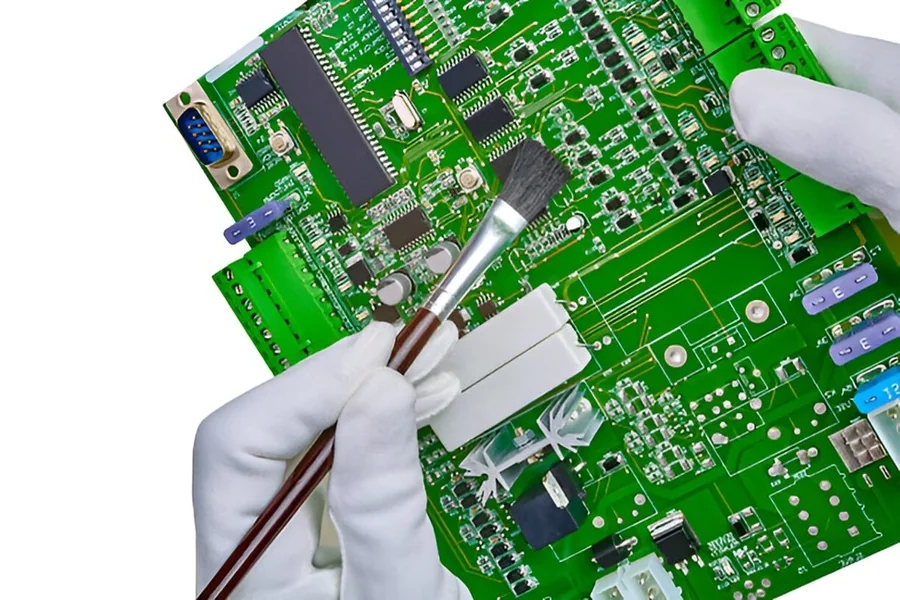
A Control PCB Manufacturer plays a critical role in today’s electronics industry by designing and producing boards that manage and regulate the performance of electrical systems. A control PCB, also known as a control circuit board, is specifically engineered to handle the logic, timing, and operational commands within electronic devices. Unlike standard PCBs that may only transmit signals, control boards serve as the “brain” of equipment, ensuring accurate decision-making and reliable performance.
The expertise of a Control PCB Manufacturer goes beyond fabrication. It involves advanced design capabilities, material selection, and testing procedures to ensure that every board meets strict performance standards. These manufacturers focus on high reliability, durability, and consistency, which are essential in sectors such as industrial automation, automotive electronics, aerospace, telecommunications, and medical equipment.
Why Control PCBs are Essential
Control PCBs are at the core of systems that require precise monitoring and execution. In an industrial automation environment, a control PCB ensures that machines perform complex tasks in sequence, reducing human error and improving efficiency. In consumer electronics, they regulate power and manage interactive functions, making devices smarter and more responsive.
Without the expertise of a reliable Control PCB Manufacturer, these systems would face risks such as power instability, signal delays, overheating, or even complete failure. By integrating advanced layouts, thicker copper layers where needed, and specialized components, control PCBs guarantee stable performance under both standard and demanding conditions.
Features of High-Quality Control PCBs
A leading Control PCB Manufacturer ensures that the boards produced come with features designed to maximize performance and longevity. Some of the most important aspects include:
- High-Grade Materials: Using FR4, aluminum, or advanced substrates depending on the application requirements.
- Thermal Stability: Ensuring effective heat dissipation to prevent overheating during heavy loads.
- Layered Design: Multi-layer construction for compact designs while supporting complex control functions.
- Customization: Boards can be tailored for unique needs such as industrial machinery, power management systems, or medical devices.
- Strict Testing: Ensuring compliance with IPC and international quality standards through electrical testing and inspection.
These features highlight why working with the right Control PCB Manufacturer is vital for product success.
Applications Across Industries
Control PCBs are indispensable in multiple industries where accuracy and reliability cannot be compromised. In the automotive sector, they regulate safety systems, infotainment units, and electric powertrain operations. In industrial equipment, control boards manage robotics, conveyor systems, and programmable logic controllers. In the medical field, precision-driven devices like imaging machines, patient monitoring systems, and diagnostic equipment rely on stable control boards to ensure patient safety and performance accuracy.
Telecommunications infrastructure also depends heavily on control PCBs for managing power flow, signal integrity, and connectivity between complex systems. Each of these applications reflects the versatility and importance of choosing the right Control PCB Manufacturer to meet industry-specific requirements.
Advantages of Working with a Control PCB Manufacturer
Partnering with a dedicated Control PCB Manufacturer brings a range of benefits to businesses. First, it ensures consistent product quality and reliability, as manufacturers utilize advanced machinery and skilled engineers in the production process. Second, manufacturers offer customization services that allow companies to design boards specific to their devices or applications, improving efficiency and performance.
Another key advantage is cost efficiency over the long term. High-quality boards are less likely to fail, reducing downtime, maintenance costs, and warranty claims. Additionally, manufacturers often integrate advanced technologies such as surface mount technology (SMT), automated optical inspection, and X-ray testing to deliver error-free products that meet the highest industry standards.
Future Trends in Control PCB Manufacturing
The future of Control PCB Manufacturer services is moving toward miniaturization, advanced thermal management, and integration with smart systems. As industries demand smaller yet more powerful devices, manufacturers are investing in research and development to produce boards that deliver higher power density in compact formats. Eco-friendly materials and lead-free processes are also becoming standard as sustainability becomes a priority across industries.
With the rise of artificial intelligence, renewable energy systems, and next-generation automotive technologies, the role of the Control PCB Manufacturer will only expand. Manufacturers who can adapt quickly to these changes will become key partners for companies pushing innovation forward.
Conclusion
A Control PCB Manufacturer provides the foundation for reliable, efficient, and advanced electronics across industries. From industrial automation to medical technology, these boards ensure precise control and dependable operation. Their importance cannot be overstated, as they serve as the central decision-making hub within countless devices and systems.
When choosing a partner for your projects, it is vital to consider not only expertise and quality but also cost-effectiveness. Working with a trusted Low-Cost PCB Manufacturer allows businesses to achieve high-quality results while keeping production budgets under control. This balance of performance and affordability is what makes the right manufacturing partner an asset to long-term success.
