

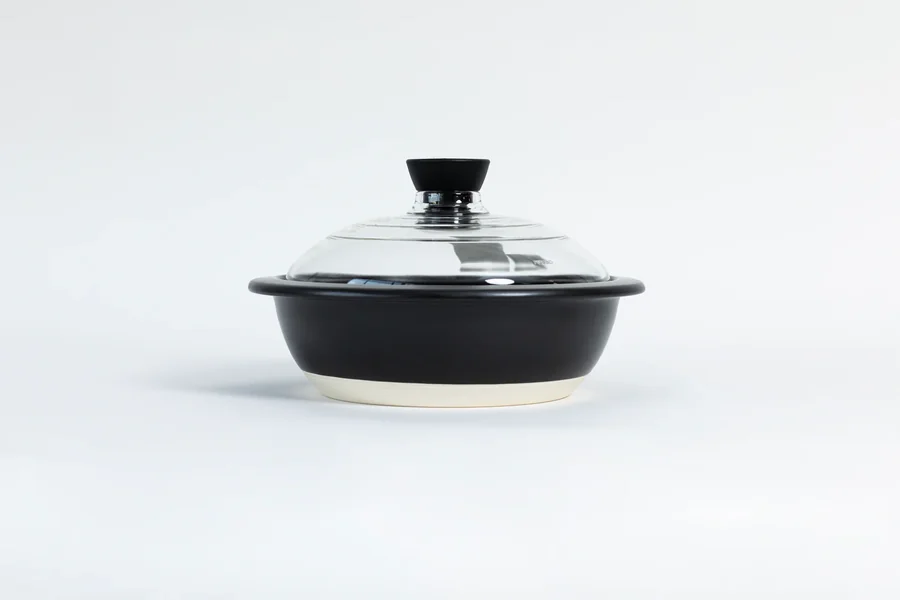
Glass and ceramic cooking pots are some of the most stylish and popular cookware options. Each option does a great job cooking food thoroughly. Each option does have unique characteristics that can make them more advantageous for particular cooking styles.
Are you deciding on which option is best for you: glass or ceramic cooking pots? This comparison should help.
Glass Cooking Pot Overview
Glass cooking pots are made with specialized glass that can withstand high cooking temperatures. Some glass pots can even be used on the stovetop.
One of the most exciting features of glass pots is how see-through they are.
#Glass Cooking Pots: Pros
– Easy cooking process monitoring
– No food smells or flavors are absorbed
– No reactions with lemons or tomatoes
– Pretty easy to clean
– Great for baking and slow cooking
#Glass Cooking Pots: Cons
– They can break or get damaged by rapid temperature changes
– Heavier than traditional pots
– Some are not able to be used on the stovetop
– They are fragile and need to be handled with care
What Is a Ceramic Cooking Pot?
Made by molding and shaping clay and then applying heat through firing, ceramic cooking pots are usually completely ceramic or partially ceramic (with a ceramic coating).
The even heating and traditional cooking style and experience have made ceramic cookware popular.
#Advantages of Ceramic Cooking Pots
– They distribute heat evenly.
– They can keep food warm by retaining heat.
– They are perfect for cooking acidic and non-acidic foods.
– Pottery is art. Colored and designed ceramic cookware is available.
– They are great for curries, soups, stews, and any other food requiring cooking for a long time.
#Disadvantages of Ceramic Cooking Pots
– Chips and cracks can form from rough handling.
– Some require a hand wash.
– Ceramic coatings of lower quality can wear out.
– They can weigh more than metal cookware.
Heat Retention
Glass vs ceramic cooking pot heat retention can be compared. Ceramic cooking pots have better heat retention. Especially for cooking where heating needs to be steady and constant, ceramic is the better option.
Glass cookware retains heat, but can cool faster from the heat source ceramic cookware can’t.
Durability
Both types of cookware can be made to last a long time, but neither is easily made to fail proof.
The opposite is true for ceramic and glass cookware. Ceramic can chip from rough handling and glass can crack from large temperature changes.
Both glass and ceramic cookware can last a long time with gentle use.
Ease of Cleaning
Cleaning glass and ceramic cooking pots is not a hassle since their surfaces do not retain stains or odors.
They can usually be cleaned with warm water and a mild dish soap with a soft sponge. Abrasive scrubbers should be avoided since they could damage the surface.
Best Uses for Glass Cooking Pots
Glass cooking pots can be used for:
– Baking casseroles
– Pasta Bakes
– Roasting Vegetables
– Serving straight from the oven
– Preparing food when you want to watch the food cook
Best Uses for Ceramic Cooking Pots
For these meals ceramic cooking pots are best:
– Soups
– Stews
– Meals that take a long time to cook
– Dishes that include Rice
– Curries
– Family Dinners
– Meals cooked in one pot
Ceramic pots are even better at retaining heat.
Which One Is Better?
What is better glass vs ceramic cooking pots can be determined by your cooking styles.
If you enjoy watching your food as it cooks and you bake often a glass cooking pot is a great choice. If you enjoy cooking food that takes a long time and you enjoy cooking food that stays warm for a longer time a ceramic cooking pot may be best.
Both glass and ceramic cooking pots have unique benefits. Glass cookware allows you to see your food cooking and won’t react with food. Ceramic cookware is excellent for retaining heat and provides a classic cooking experience. The best pot for you depends on your cooking styles and the types of meals you make. Having both types of cookware is a great asset for any kitchen.
